
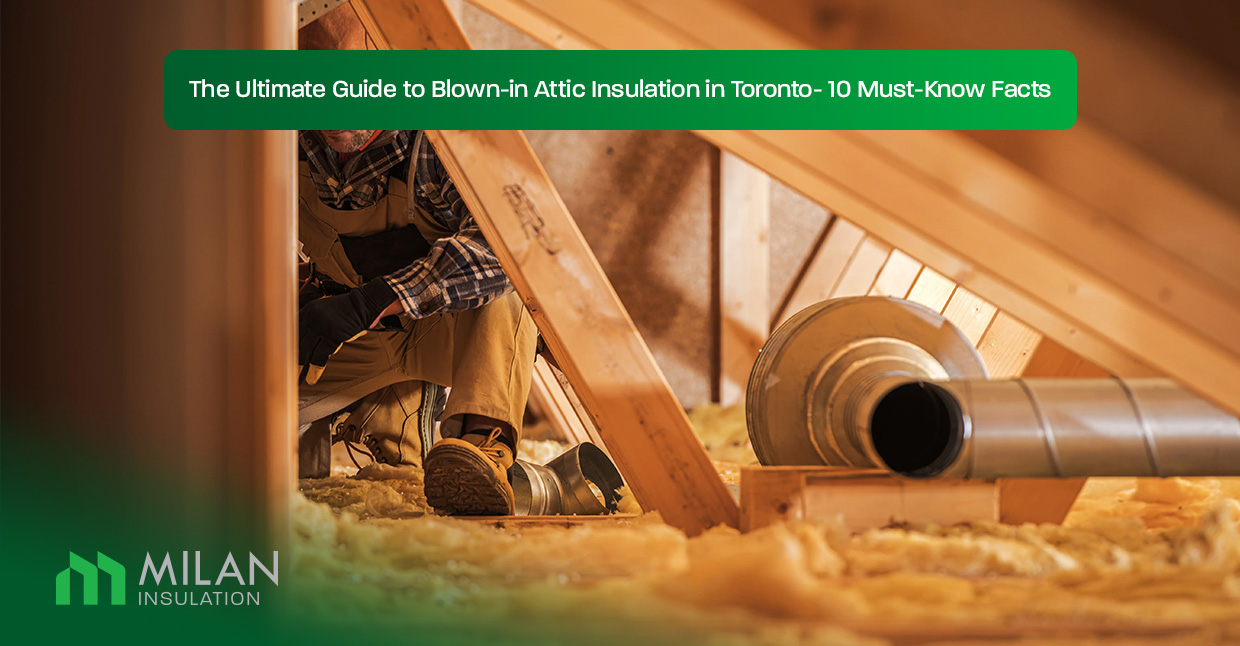
The Ultimate Guide to Blown-in Attic Insulation in Toronto begins with a simple truth: your attic is the single most critical zone for energy efficiency in your home. In a city like Toronto—where winter nights dip below –20°C and summer afternoons soar past 35°C—an improperly insulated attic doesn’t just waste energy; it compromises comfort, indoor air quality, and long-term structural integrity. Blown-in attic insulation, with its seamless coverage, superior thermal performance, and adaptability to complex attic layouts, has become the gold standard for both retrofits and new builds across the Greater Toronto Area.
The Ultimate Guide to Blown-in Attic Insulation in Toronto wouldn’t be complete without acknowledging the professionals who bring this technology to life. Among Toronto’s insulation providers, Milan Insulation stands out for its precision installations, CUFCA-certified technicians, and deep understanding of local building codes and climate challenges. Whether you’re in a century home in Parkdale or a modern townhouse in Vaughan, Milan Insulation exemplifies the expertise, reliability, and customer-focused service that define top-tier blown-in attic insulation in the region. Their success underscores why material quality and professional installation go hand-in-hand in maximizing your home’s efficiency.
Table of Contents
ToggleWhy This Guide Matters for Toronto Homeowners
Toronto’s housing stock is among the most diverse in Canada, ranging from pre-1920s heritage homes with minimal insulation to 2020s builds striving for Net Zero readiness. Yet, regardless of age, over 65% of Toronto homes are under-insulated in the attic, according to a 2024 Natural Resources Canada housing audit. This gap leads to inflated energy bills, uneven temperatures, ice dam formation in winter, and premature HVAC wear.
Blown-in attic insulation—installed as loose-fill cellulose or fiberglass—is uniquely suited to address these issues. Unlike batt insulation, which leaves gaps around obstructions, blown-in material flows into every crevice, creating a continuous thermal barrier. But to truly benefit, homeowners need accurate, actionable information—not marketing fluff.
That’s why we’ve compiled The Ultimate Guide to Blown-in Attic Insulation in Toronto: 10 Must-Know Facts—a comprehensive, expert-backed resource that cuts through the noise and delivers clear insights on costs, materials, performance, rebates, installation, and long-term value. Whether you’re planning an upgrade, selling your home, or simply tired of sky-high utility bills, this guide is your roadmap to smarter, more sustainable living.
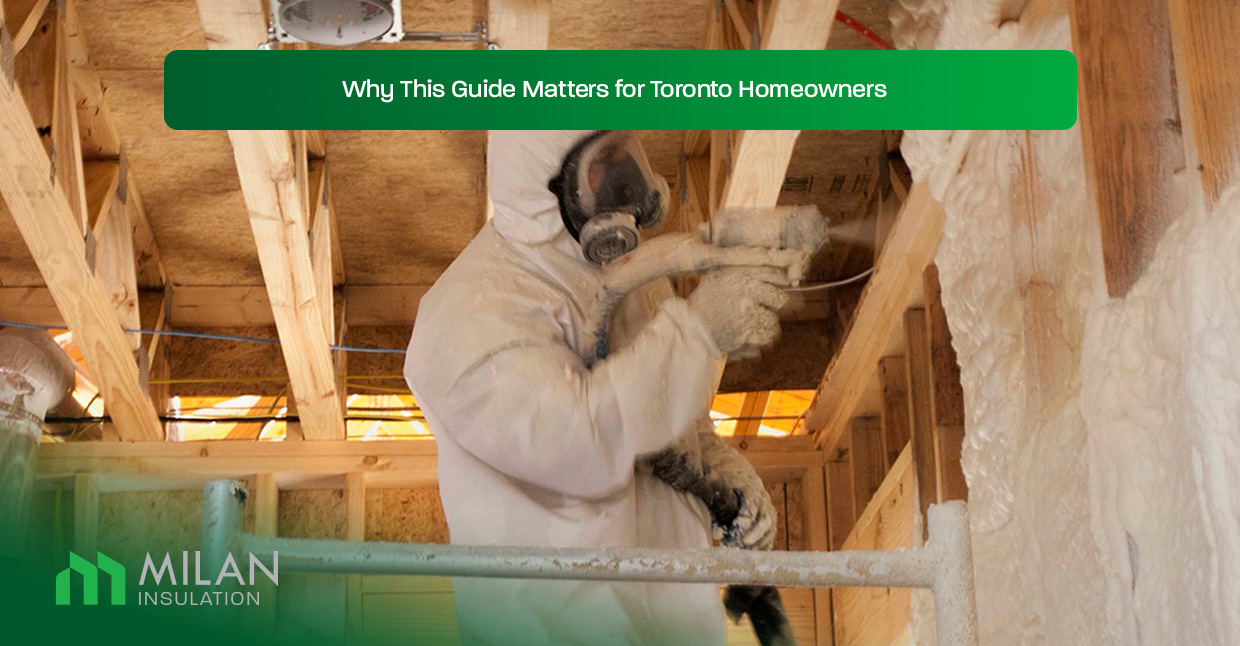
Fact #1: Blown-in Attic Insulation Can Reduce Your Energy Bills by Up to 30%
One of the most compelling reasons to invest in blown-in attic insulation in Toronto is the dramatic impact on your monthly utility costs. According to the Office of Energy Efficiency (OEE), heating and cooling account for nearly 60% of a typical Canadian home’s energy use—and the attic is responsible for up to 25% of heat loss in winter and 40% of heat gain in summer.
By upgrading your attic to the recommended R-50 to R-60 (as per Ontario’s Building Code for Climate Zone 6), you can reduce overall energy consumption by 20–30%. For the average Toronto household spending $2,500 annually on gas and electricity, that’s $500–$750 in guaranteed yearly savings.
These savings compound over time. Over a 10-year period, that’s $5,000–$7,500 back in your pocket—far exceeding the typical $2,000–$4,000 installation cost. And with federal and provincial rebates now covering up to $5,000 through the Canada Greener Homes Grant, many homeowners can achieve this upgrade at little or no out-of-pocket expense.
This is why The Ultimate Guide to Blown-in Attic Insulation in Toronto emphasizes energy savings as the foundational benefit—both financially and environmentally.
Fact #2: Toronto’s Climate Demands High-Performance Attic Insulation
Toronto experiences a humid continental climate with four distinct seasons, extreme temperature swings, and high humidity in summer. These conditions place unique stress on a home’s thermal envelope.
In winter, warm indoor air rises and escapes through an under-insulated attic, causing:
- Cold ceilings and upper floors
- Ice dams (due to uneven roof snow melt)
- Condensation and potential mold growth in attic framing
In summer, solar radiation heats the roof deck to over 60°C, turning the attic into an oven that radiates heat downward—forcing air conditioners to run longer and harder.
Blown-in attic insulation mitigates both issues by:
- Creating a high-R-value thermal barrier that slows conductive heat transfer
- Filling gaps that allow convective air leakage
- Working in tandem with proper attic ventilation to expel trapped heat and moisture
The Ultimate Guide to Blown-in Attic Insulation in Toronto stresses that generic insulation advice won’t suffice—you need solutions calibrated for Toronto’s specific climate zone, humidity levels, and seasonal demands.
Fact #3: Blown-in Insulation Outperforms Batt Insulation in Real-World Conditions
While fiberglass batts are common in new construction, they fall short in retrofits and complex attics. Batts are rigid, pre-cut, and easily compromised by:
- Gaps around wiring, plumbing, and light fixtures
- Compression during installation (which lowers R-value)
- Settling or shifting over time
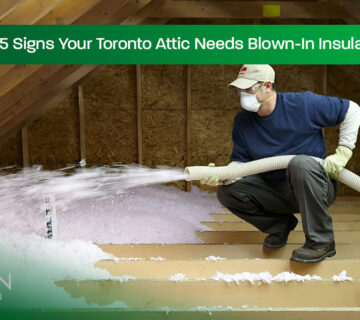
In contrast, blown-in attic insulation—whether cellulose or fiberglass—is fluid and adaptive. Installed using specialized blowing machines, it:
- Conforms perfectly to irregular joist spacing
- Seals micro-leaks and hard-to-reach corners
- Maintains consistent density and R-value across the entire attic floor
Studies by the U.S. Department of Energy (applicable to similar Canadian climates) show that homes with blown-in insulation achieve up to 22% better thermal performance than those with batts—even when labeled R-values appear identical on paper.
Thus, The Ultimate Guide to Blown-in Attic Insulation in Toronto strongly favors blown-in systems for existing homes, where precision and coverage matter most.
Fact #4: You Likely Qualify for Significant Government Rebates
Many Toronto homeowners don’t realize that upgrading attic insulation is one of the easiest ways to access government energy efficiency funding.
Through the Canada Greener Homes Grant, you can receive:
- Up to $5,000 for eligible insulation upgrades
- An additional $600 for a pre- and post-upgrade EnerGuide evaluation
Enbridge Gas and Toronto Hydro also offer:
- Instant discounts at the point of sale (via participating contractors)
- Cashback programs for insulation reaching R-50+
To qualify, your project must be completed by a licensed contractor and meet minimum R-value thresholds. The process involves:
- Booking an energy audit with a Registered Energy Advisor
- Receiving your pre-retrofit EnerGuide label
- Completing the insulation upgrade
- Scheduling a follow-up audit to verify improvements
The Ultimate Guide to Blown-in Attic Insulation in Toronto recommends starting the rebate process before installation—this ensures your project meets all technical requirements and maximizes financial support.

Fact #5: There Are Two Main Types—Cellulose and Fiberglass—and Each Has Pros and Cons
Not all blown-in insulation is the same. The two primary types used in Toronto are:
1. Cellulose Insulation
- Made from 80–85% recycled newsprint
- Treated with borate for fire, mold, and pest resistance
- Higher density provides better air sealing and sound dampening
- Slightly higher R-value per inch (~R-3.6 to R-3.8)
- More eco-friendly, but can settle slightly if not installed at the proper density
2. Fiberglass Insulation
- Made from glass fibers and 20–40% recycled content
- Non-combustible and resistant to moisture
- Lighter weight, easier to install in deep cavities
- R-value of ~R-2.2 to R-2.7 per inch (requires greater depth for R-50)
- Less prone to settling over time
Your choice depends on priorities: eco-impact and air sealing (cellulose) vs. long-term stability and moisture resistance (fiberglass).
The Ultimate Guide to Blown-in Attic Insulation in Toronto advises consulting with a certified contractor to evaluate your attic’s condition, ventilation, and existing materials before choosing.
Fact #6: Proper Attic Ventilation Is Non-Negotiable
Blown-in insulation must be paired with adequate attic ventilation—otherwise, you risk:
- Trapped moisture leading to rot or mold
- Overheated shingles reduce the roof’s lifespan
- Ice dams from poor airflow in winter
Toronto homes should follow the 1:300 ventilation rule: 1 square foot of net free vent area for every 300 square feet of attic floor space, split evenly between soffit (intake) and ridge/roof (exhaust) vents.
During installation, technicians must:
- Install ventilation baffles (rafter vents) to keep soffit vents clear
- Avoid blocking existing vents with insulation
- Verify airflow paths before sealing the attic
The Ultimate Guide to Blown-in Attic Insulation in Toronto emphasizes: insulation without ventilation is a recipe for long-term damage.
Fact #7: Installation Is Fast, Clean, and Minimally Disruptive
Contrary to popular belief, upgrading attic insulation doesn’t require major demolition. Most blown-in projects in Toronto are completed in 4–8 hours with minimal homeowner involvement.
Contractors access the attic via:
- Existing hatch or pull-down stairs
- Small wall or roof openings (if no interior access)
They then:
- Protect stored items and HVAC equipment
- Blow insulation evenly across the attic floor
- Clean up debris and verify the final R-value depth
Homeowners are typically free to stay in the house during the process. There’s no painting, drywall repair, or structural modification needed.
This ease of installation is a key reason why The Ultimate Guide to Blown-in Attic Insulation in Toronto ranks it among the top 3 home efficiency upgrades by ROI.
Fact #8: It Adds Long-Term Value to Your Home
Energy-efficient homes sell faster and for more money. According to a 2023 Royal LePage report, Toronto homes with documented energy upgrades command a 4–7% price premium and spend 12 fewer days on the market on average.
Blown-in attic insulation is a silent selling point—buyers may not see it, but they’ll notice:
- Lower utility bills in the disclosure package
- Consistent temperatures during showings
- High EnerGuide rating or Green Home certification
For sellers in competitive neighborhoods like The Annex, Leslieville, or Etobicoke, this can be the edge that secures a full-price offer.
The Ultimate Guide to Blown-in Attic Insulation in Toronto reminds readers: efficiency is equity.

Fact #9: It’s Safe, Non-Toxic, and Fire-Resistant
Modern blown-in insulation materials are rigorously tested for safety:
- Cellulose: Treated with borates—non-toxic, odorless, and Class A fire-rated
- Fiberglass: Non-combustible and contains no formaldehyde (in modern products)
Both meet Canadian building and fire codes and pose no health risk when installed properly. Unlike spray foam, they don’t off-gas volatile organic compounds (VOCs).
The Ultimate Guide to Blown-in Attic Insulation in Toronto confirms: when installed by professionals, blown-in insulation is one of the safest, most sustainable choices for your family and your home.
Fact #10: DIY Is Risky—Professional Installation Is Essential
While blown-in insulation kits are sold at hardware stores, DIY installation is strongly discouraged in Toronto homes. Common mistakes include:
- Uneven coverage leading to cold spots
- Blocking soffit vents and causing moisture damage
- Over-compressing material and reducing R-value
- Ignoring electrical or structural hazards
Professional contractors use calibrated blowing machines, moisture meters, and thermal cameras to ensure precision. They also carry liability insurance—protecting you if something goes wrong.
The Ultimate Guide to Blown-in Attic Insulation in Toronto concludes: This is not a weekend project. The modest cost of hiring experts pays for itself in performance, safety, and peace of mind.
Final Thoughts: Your Roadmap to a Smarter, More Efficient Home
The Ultimate Guide to Blown-in Attic Insulation in Toronto: 10 Must-Know Facts isn’t just a list—it’s a strategic framework for making one of the smartest home investments you’ll ever make. From slashing energy bills and qualifying for rebates to increasing comfort and resale value, the benefits are real, measurable, and long-lasting.
Toronto’s climate, housing diversity, and rising energy costs make attic insulation more than a comfort upgrade—it’s a necessity for modern, responsible homeownership.
If you’re ready to take the next step, start with an energy audit, research certified contractors, and explore available rebates. With the right approach, your attic can transform from an energy leak into your home’s strongest defense against waste, discomfort, and unpredictability.
Because in the end, The Ultimate Guide to Blown-in Attic Insulation in Toronto isn’t about insulation—it’s about control, confidence, and long-term savings in every season.
FAQs
Does blown-in attic insulation really lower energy bills in Toronto?
Yes. Properly installed blown-in attic insulation can reduce your home’s heating and cooling costs by up to 30%. In Toronto’s climate—where attics are major sources of heat loss in winter and heat gain in summer—upgrading to the recommended R-50 to R-60 insulation level creates a continuous thermal barrier that significantly cuts energy waste and lowers utility bills year-round.
Is cellulose or fiberglass better for blown-in attic insulation in Toronto?
Both are effective, but they serve different needs:
- Cellulose (made from 80–85% recycled paper) offers superior air sealing, sound dampening, and a slightly higher R-value per inch. It’s ideal for older Toronto homes with irregular framing.
- Fiberglass is non-combustible, highly resistant to moisture, and less prone to settling over time—making it a strong choice for attics with ventilation concerns.
A certified contractor can help you choose based on your home’s age, structure, and moisture conditions.

No comment